Disclosure: This page contains affiliate links. If you buy through them, I earn a small commission at no extra cost to you. This review reflects independent research, verified buyer feedback, and competitive analysis, not paid placement.
Update (September 28, 2026): The WOLF Cub Single Watch Winder is back in stock on Amazon at $399. If you need to choose a winding direction, the Wolf Heritage Single Watch Winder below is the step up.
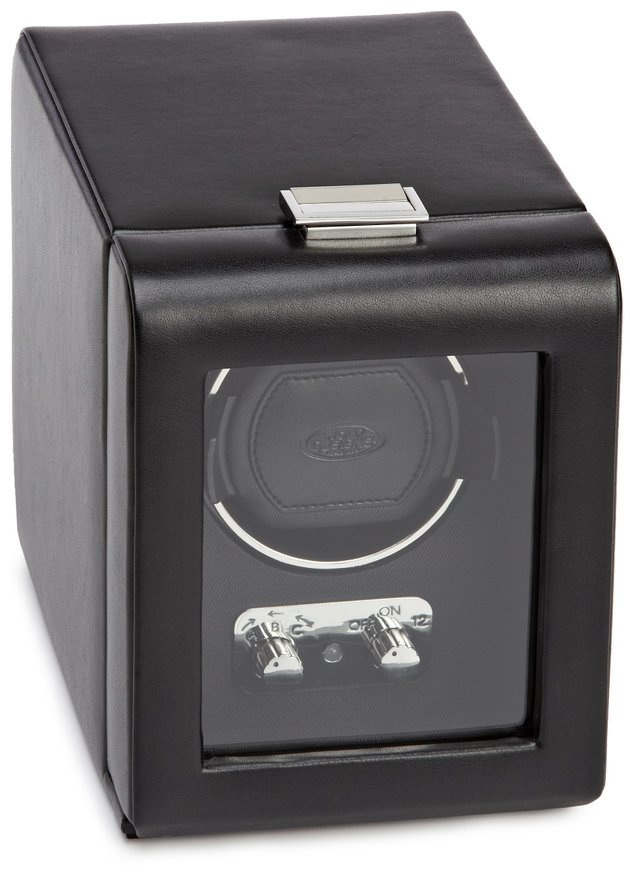
The WOLF Cub Single Watch Winder is Wolf’s entry point into the single-winder category. It brings the core attributes Wolf is known for, a quiet Japanese motor, the Lock-in Dynamic Cuff watch holder, dual AC/battery power, a locking glass cover, and a 5-year warranty, at a lower price than the Heritage. The trade-off is simplicity: the Cub runs one fixed program (900 turns per day, bi-directional) rather than letting you choose a direction. For most automatic watches, Rolex included, that’s all you need. If your watch has to wind in one direction only, the Heritage is the upgrade. Here is what the Cub actually delivers and where it sits in the market.


Check the Wolf Cub on Amazon →
Quick Specs
| Specification | Details |
|---|---|
| Model | WOLF Cub Single Watch Winder with Cover |
| Item No. | 461103 |
| Capacity | 1 watch winding position |
| Rotation Modes | Bi-directional only (fixed program) |
| TPD | 900 per day, counted (not adjustable) |
| Watch Holder | Lock-in Dynamic Cuff (up to ~52 mm case diameter) |
| Cover | Locking glass cover with key |
| Interior | Soft suede finish |
| Dimensions | 5.25 × 6 × 5.75 inches |
| Weight | 2.7 lbs |
| Power | AC adapter or batteries (dual power) |
| Warranty | 5-year Wolf warranty |
| Amazon ASIN | B00VQIZI70 |
What the Cub Gets Right
Wolf’s reliability at a lower price. Wolf Designs has been making watch winders since 1834, originally as a case maker, and now as the benchmark single-winder brand in the enthusiast market. The Cub carries Wolf’s motor quality, build standards, and 5-year warranty at a more accessible entry point. For buyers who want Wolf reliability without paying Heritage prices, this is exactly what the Cub is for.
Lock-in Dynamic Cuff. Wolf’s proprietary cuff system holds the watch on the drum with a spring-tension mechanism rather than a static foam pillow. The cuff adjusts to accommodate case diameters from smaller dress watches up to approximately 52mm sport cases. This is the same cuff technology used throughout the Wolf lineup; it’s not a cost-reduced version. The practical advantage is that the watch stays securely positioned during rotation without requiring pillow swaps for different case sizes.
Quiet motor. The Cub’s Japanese motor is consistently described in owner reports as inaudible in normal use; bedroom nightstand use is practical. Wolf does not publish noise-decibel measurements, but the pattern in buyer reviews is clear: the Cub is quiet enough to leave running in a bedroom or home office without being noticeable.
Dual AC/battery power. Like the Heritage, the Cub supports both AC adapter and battery power. This gives placement flexibility, it does not need to be within cable distance of an outlet, and keeps the watch winding during power outages. At the Cub’s price point, dual power isn’t a given among competing brands.
Locking glass cover. The Cub includes a hinged glass cover with a lock and key. This is both a display feature and a practical one: the lock prevents accidental opening or unauthorized access. Most budget single winders at this price either have no cover or a soft lid without a lock.
What’s Different from the Heritage
The Cub and the Heritage both use Wolf’s patented turn-counting system: every WOLF winder counts the actual turns per day rather than estimating them from run time, and both run 900 turns per day with pause and sleep phases. The real differences are control and size. The Heritage lets you choose clockwise, counter-clockwise or bi-directional rotation and adds an optional 12-hour delay; the Cub is bi-directional only, with a 10-second start delay. The Heritage is also bigger, at 5.5 × 8.75 × 6.75 inches against the Cub’s 5.25 × 6 × 5.75.
For most watches, the Cub’s fixed program is all you need. Automatic movements have slipping clutches that prevent overwinding, and nearly all modern calibers, including Rolex, Omega, TAG Heuer and Seiko, wind in both directions, so bi-directional rotation covers them. The Heritage’s direction settings matter mainly for the few movements, often vintage ones, that wind in one direction only.
Pros and Cons
Pros
- Wolf build quality and 5-year warranty at a lower price than the Heritage
- Lock-in Dynamic Cuff: the same watch holder used in the full Wolf lineup
- Consistently quiet operation: practical for bedroom use
- Dual AC/battery power: placement flexibility
- Locking glass cover: secure and display-worthy
- Compact footprint: 5.25 × 6 × 5.75 inches fits on a nightstand or dresser
Cons
- Fixed program, bi-directional only: no direction or TPD choice, which matters only for one-direction movements
- Single position only: not suitable if you have two or more automatics to wind simultaneously
- Price premium over no-name alternatives: you are paying for Wolf’s reliability track record; budget alternatives undercut it significantly
What Owners Are Saying
Amazon reviews for the Wolf Cub follow a consistent pattern. The majority of long-term owners (12 to 36 months) report quiet, trouble-free operation with no motor issues. Owners with Rolex, Omega, and TAG Heuer all report their watches keep correct time with no deviations attributable to the winder. The compact size and locking glass cover draw frequent positive mention. The Cub looks good on a nightstand or dresser and doesn’t announce itself as a mechanical device. The small number of critical reviews tend to focus on price relative to simpler alternatives, not on reliability or performance. Wolf’s 5-year warranty covers the period when most entry-level winder motors fail; this is no coincidence. Read current Amazon reviews for the Wolf Cub →
Alternatives to Consider
WOLF Heritage Single Watch Winder: The step up within the Wolf lineup. Adds a choice of clockwise, counter-clockwise or bi-directional rotation and an optional 12-hour delay, which matters for movements that wind in one direction only. Same turn-counting, same dual power, same cuff system, same warranty. Read our Heritage review →
CHIYODA Single Watch Winder: The budget alternative to consider if price is the primary constraint. The Mabuchi motor is reliable for its tier, and it covers the basics (CW/CCW/bi-directional, multiple TPD settings). What you give up is Wolf’s cuff system, glass cover, and warranty reputation. For a second watch or a travel-use winder, a reasonable trade-off. Check price on Amazon →
Heiden Single Watch Winder: A US-based brand with a loyal following. The Heiden single offers 15 TPD settings and three direction modes, more granularity than most budget winders. Good option if you prefer to buy from a smaller brand with responsive US customer support. Read our Heiden Single review →
Also Consider
Single Winder Alternatives
Budget down, step up within Wolf, or choose a reliable US brand.

As an Amazon Associate I earn from qualifying purchases.
Frequently Asked Questions
What setting should I use on the Wolf Cub for a Rolex?
There’s nothing to set. The Cub runs a fixed program of 900 turns per day in both directions, with no direction or TPD controls. Rolex doesn’t publish an official winder figure, but its current calibers wind in both directions and are usually set around 650 to 800 turns per day. The Cub’s 900 is slightly higher, which is harmless: the slipping clutch stops the mainspring from overwinding.
Does the Wolf Cub work on batteries?
Yes. The Cub supports both the included AC adapter and battery power. This means you can place it anywhere, with no outlet required, and it continues winding during power outages. Dual power is included as standard; it is not an add-on.
How is the Wolf Cub different from the Wolf Heritage?
Not in how they count: both use Wolf’s patented turn-counting and run 900 turns per day. The Heritage lets you choose clockwise, counter-clockwise or bi-directional rotation and adds an optional 12-hour delay; the Cub is bi-directional only. Both use the Lock-in Dynamic Cuff, dual power, a locking cover, and the same 5-year warranty. For most modern watches the difference is invisible. Pick the Heritage only if your watch is one of the few that winds in a single direction.
Is the Wolf Cub loud?
No. Owner reports consistently describe the Cub as quiet: inaudible at normal room distance. Bedroom nightstand use is practical for the vast majority of buyers. Wolf’s motor quality at this price is specifically known for quiet operation.
What watch sizes fit in the Wolf Cub?
The Lock-in Dynamic Cuff accommodates most automatic watches from standard dress watch sizes up to approximately 52mm case diameter. This covers the overwhelming majority of mainstream automatics: Rolex, Omega, TAG Heuer, Seiko, Grand Seiko, Panerai (though some larger Panerai cases may be tight). If you have an unusually large case (55mm+), measure and confirm before purchasing.
How long does the Wolf Cub warranty last?
Two years, covered by Wolf Designs directly. This is a meaningful differentiator: most competing entry-level winders carry 1-year or no warranty. Wolf’s warranty period also reflects where most entry-level winder motors fail: inside that 12 to 24 month window. A 5-year warranty covers that risk period.
Verdict
The Wolf Cub is the right single winder if you want Wolf quality (the motor, the cuff system, the warranty) at a lower price than the Heritage, and you don’t need to choose a winding direction. It’s quiet, compact, well-built, and backed by a 5-year warranty that covers the risk window where cheaper winders typically fail. The only buyers who should look elsewhere are owners of one-direction movements (the Heritage solves that) and anyone who needs to wind two or more watches (look at Wolf’s double winder lineup). For the mainstream single-watch buyer, the Cub is the most reliable option at its price. Check the Wolf Cub on Amazon →