You’ve narrowed down your watch winder search to a few models. But there’s one final decision that stumps most collectors: should you go with AC power, battery operation, or a dual-powered unit?
This isn’t just about convenience. Your power choice affects operating costs, placement flexibility, motor longevity, and even the safety of your watches during power outages. Choose wrong, and you might find yourself constantly swapping batteries or dealing with an inconveniently placed winder tethered to an outlet.
Let me walk you through the real-world implications of each option so you can make the right choice for your situation.
Disclosure: This article contains affiliate links. If you purchase through these links, we may earn a commission at no additional cost to you.
Why Your Watch Winder’s Power Source Actually Matters
Most people don’t think much about power sources until they face a specific problem. Maybe you want to place your winder inside a safe or display cabinet with no nearby outlets. Or perhaps you’ve experienced a power outage and wondered if your watches stopped winding mid-cycle.
The power source you choose determines three critical factors: where you can place your winder, ongoing operational costs, and reliability during power disruptions. Each has legitimate trade-offs worth understanding before you buy.
AC-Powered Watch Winders: The Reliable Workhorse
The Advantages of Plug-In Power
AC-powered winders connect directly to your wall outlet, drawing power from your home’s electrical system. This gives them several distinct advantages.
Consistent, uninterrupted operation is the biggest benefit. Your watches wind 24/7 without any intervention. You never need to worry about batteries dying at an inconvenient time or forgetting to check power levels.
The motors in AC units typically run smoother and more reliably over time. Consistent voltage means consistent rotation speeds, which matters for properly winding your watches according to their specific TPD (turns per day) requirements.
Zero ongoing costs for operation. Once you plug it in, that’s it. You’re not buying batteries every few months or remembering to recharge anything. Over years of ownership, this saves both money and hassle.
AC winders also tend to have more robust motors since they’re not constrained by battery power limitations. This means they can handle heavier watches or multiple watches with less strain on the mechanism.
The Drawbacks You Should Know
The obvious limitation is placement flexibility. You need to be within reach of an outlet, and that cord needs to run somewhere. This rules out certain display locations or requires visible power cables that might clash with your décor.
Power outages stop your winder completely. If you live in an area with frequent electrical issues, your watches stop winding until power returns. For most collections this isn’t critical—a day or two of stopped rotation won’t harm your watches—but it’s worth considering.
Some collectors worry about electrical interference or electromagnetic fields affecting their watches. While modern winders produce minimal EMF and quality watches are well-shielded, it’s a concern some people have with constantly-powered devices.
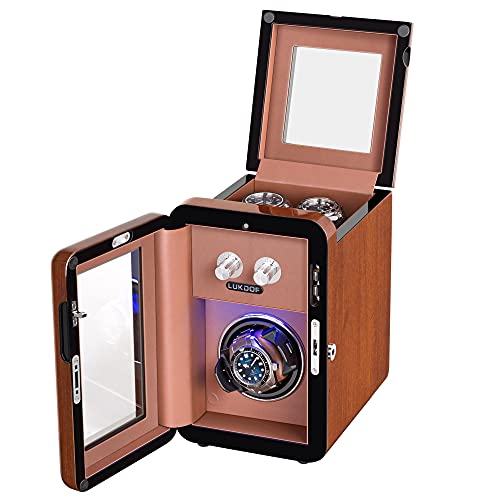
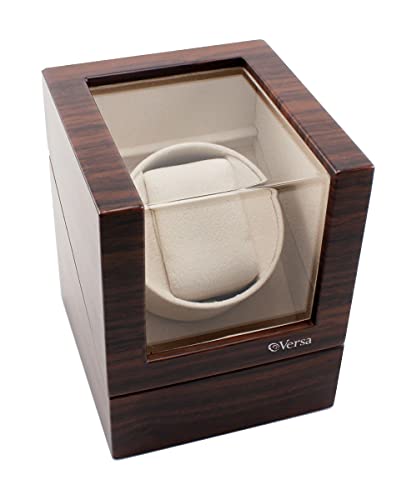
AC Only Watch Winders

Battery-Powered Watch Winders: Maximum Flexibility
Why Battery Operation Appeals to Many Collectors
Battery-powered winders liberate you from outlet proximity. Want your winder inside a safe? In a display cabinet across the room? On a bookshelf nowhere near power? Battery operation makes it possible.
Completely silent operation is another benefit. Without the faint hum of an AC adapter, battery winders run whisper-quiet. If you keep watches in your bedroom or a quiet study, this matters more than you might think.
They’re also inherently portable. Moving your winder between rooms, taking it on extended trips, or repositioning it becomes effortless when you’re not dealing with power cables.
Battery winders continue operating during power outages, providing uninterrupted service regardless of your home’s electrical situation. For collectors in areas with unreliable power, this alone might justify the choice.
The Real Costs and Limitations
Battery replacement or recharging becomes a recurring task. Depending on the model and usage, you might need new batteries every 2-6 months. This creates both an ongoing cost and a maintenance requirement you need to remember.
The math isn’t trivial either. Quality batteries for a winder can cost $10-20 every few months. Over five years, that’s potentially $200-400 in battery costs—sometimes approaching the original winder’s purchase price.
Battery-powered motors often have less torque than their AC counterparts. This usually doesn’t matter for standard automatic watches, but if you’re winding heavy or complicated pieces, the reduced power might become noticeable over time.
Battery voltage decreases as they discharge, which can lead to inconsistent rotation speeds near the end of the battery life. Your watch might get proper winding when batteries are fresh but inadequate turns per day as they weaken.
The Best of Both Worlds: Dual-Power Watch Winders
Here’s where it gets interesting. Many modern winders offer both AC and battery operation, letting you choose based on your current needs.
These dual-power units typically plug into AC power for daily operation but include a battery backup that kicks in during outages. It’s the flexibility of battery power with the convenience and cost-effectiveness of AC operation.
The better dual-power models use the batteries purely as backup rather than constantly draining them. This means you get years between battery replacements rather than months, dramatically reducing ongoing costs while maintaining power-outage protection.
When shopping for dual-power winders, look for models that clearly indicate how the power switching works. Some seamlessly transition between AC and battery, while cheaper units require manual switching. The automatic versions cost more but provide genuine set-it-and-forget-it convenience.
Battery compartments should be easily accessible without tools. You’ll appreciate this feature when it’s time to swap batteries or check their condition. Hidden compartments requiring screwdrivers get old quickly.
Dual Power Watch Winders



Which Power Source Matches Your Situation?
Let me break this down into practical scenarios.
Choose AC-only if: You have convenient outlet access where you want the winder, value the lowest total cost of ownership, and don’t experience frequent power outages. This works perfectly for most home situations where the winder sits on a dresser or nightstand.
Choose battery-only if: You need placement in locations without outlet access (inside safes, certain display cabinets), absolute silence is critical, or you frequently relocate your winder. Just factor in the ongoing battery costs as part of your ownership budget.
Choose dual-power if: You want the best of both options and don’t mind paying a bit more upfront. This makes sense if you value flexibility, want backup protection during outages, or might change where you keep your winder over time.
Power Consumption: The Often-Overlooked Factor
Whether AC or battery, watch winders consume minimal power. A typical unit draws 3-10 watts—less than an LED nightlight. Your annual electricity cost for an AC winder might be $5-10 at most.
This is worth knowing because some collectors assume AC winders significantly impact their power bill. In reality, the electrical cost is negligible. The convenience and reliability of AC power comes essentially free from an operating cost perspective.
Making Your Decision
Think about your specific situation honestly. Where will this winder live? Do you have outlet access there? How often do you lose power? What’s your tolerance for maintenance tasks like battery replacement?
For most collectors with a dedicated watch storage area near outlets, AC power or dual-power units offer the best balance of convenience and cost-effectiveness. The reliability of always-on power and zero maintenance beyond occasional cleaning makes them the practical choice.
Battery-only units shine in specific scenarios where placement flexibility outweighs ongoing costs, or when you genuinely need the portability and outage protection.
Your Next Step
The right power choice depends on your unique circumstances, but understanding these trade-offs ensures you won’t face buyer’s remorse later.
Ready to explore specific models? Check out our comprehensive guide to the best dual-power watch winders that offer complete flexibility, or browse our recommendations for reliable AC-powered units if you’ve decided plug-in power makes sense for your collection.
Whatever you choose, investing in a quality winder with the right power source means your automatic watches stay properly wound and ready to wear—which is the whole point.


We may earn an affiliate commission when you purchase through links on our site. This keeps it 100% reader-supported and free of ads or sponsorships. Thanks for your support!